The Engagement · Step two
The Creative Pilot, and what you actually agree to.
A focused paid engagement that turns the audit's recommendations into finished creative you can test — video ads, scripts and creative variations, in the mix your proposal defines.
The Creative Audit before it is complimentary and carries no obligation. This page is what the paid step after it involves — the sequence, what you approve, what you receive, and what sets the fee.
The Pilot in eight seconds
Test the angles. Keep the winner.
- Silent film, 8 seconds, AI-generated character. On screen: Not sure which ad will work? Test the angles. Real ads. Real data. Keep the winner. The Creative Pilot First, a free Creative Audit
Pilot
Priya, 48 · The Pragmatist
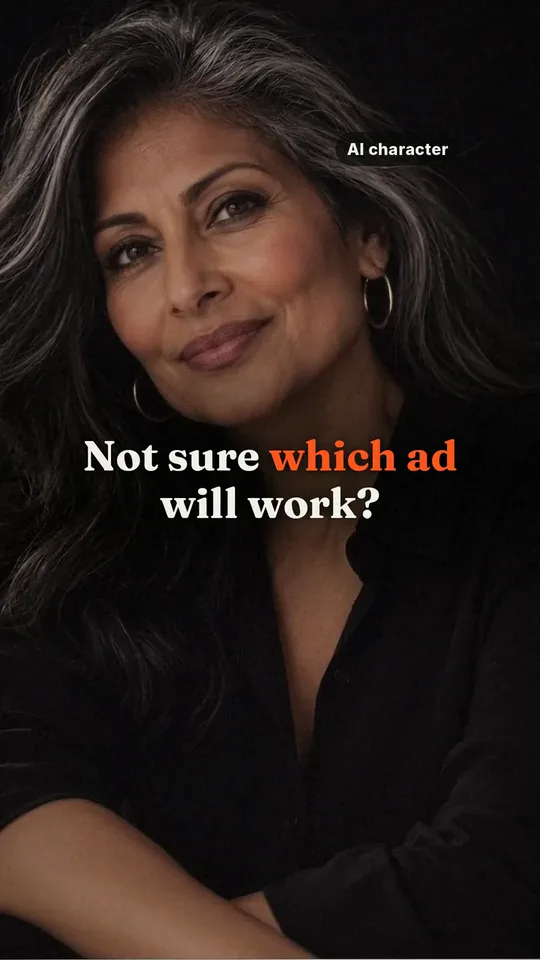
AI presenters from Rocco Gagiano Studio's Digital Presenters, not customers. Silent, about eight seconds each.
What happens after the complimentary audit
You receive the audit we promised
Your Creative Audit is complimentary. Share your website and examples of your current creative. Within two business days of receiving the information we need, we'll email you a focused review with three creative opportunities for your 50+ audience and a recommended next step. No obligation to proceed. Three creative opportunities for your 50–70 customer, which one we would test first, and whether a paid Creative Pilot is worth doing at all. Sometimes the answer is that it is not.
If a pilot fits, we propose one in writing
We clarify the business objective and the creative priority, then set out scope, responsibilities, deliverables and fee in a written proposal. Nothing is assumed from the audit — the proposal is where the engagement is actually defined.
Paid work starts once that is agreed
Work begins according to the acceptance and payment terms in the proposal. Taking the complimentary audit puts you under no obligation to commission anything, and we would rather you walked away than bought a pilot you did not need.
When a pilot is a good fit
- You are selling to consumers aged 50 to 70 and want creative built for that customer rather than younger work aged up to fit.
- Your advertising is running but the concepts have gone stale, or the product is not being explained clearly enough to convert.
- You want to see how the studio works on a defined piece before considering anything recurring.
- You have a product, a clear objective, and someone who can give consolidated feedback and approvals.
One precondition worth settling early
The creative is built to be tested, so a pilot needs a route to testing. A media buyer or an in-house team running paid social is that route. Without one, we agree who will run and measure the work before anyone promises a learning loop.
The engagement, step by step
Eight steps. For each one: what the studio does, what you supply or approve, and what lets the next step begin.
- 01
Brief and inputs
- We do
- We establish the product, audience, market, channel and objective, and read the creative already running alongside any performance data you can share.
- You supply or approve
- Brand guidelines, existing creative and assets, approved product claims, any mandatory wording or regulatory restrictions, and permission to use what you send.
- Before the next step
- A brief both sides recognise, and clarity on what may and may not be claimed about the product.
- 02
Creative direction
- We do
- We develop the agreed concepts and state the hypothesis behind each — what we think is costing you attention or belief. Each names its casting, message, visual approach, format and call to action.
- You supply or approve
- You review the directions against what you know about your customer, and choose which go forward.
- Before the next step
- Your approval of the direction. Production does not begin before it.
- 03
Scripts and production plan
- We do
- We write the scripts or storyboards for the agreed formats, and set out how each is made: a real creator, a clearly disclosed AI-generated character, product-led visuals, or a combination.
- You supply or approve
- You approve the scripts, the claims they make and the visual direction. This is where a line your legal or regulatory review will reject should be caught.
- Before the next step
- Approved scripts and an agreed production approach. An AI-generated character is never presented as a real customer or a genuine testimonial — that one is not negotiable per engagement.
- 04
Production
- We do
- We produce the approved work using the agreed assets and casting approach, and bring it to the review checkpoint.
- You supply or approve
- You review at that checkpoint rather than through an open-ended revision loop.
- Before the next step
- Approved finished creative for the lead concepts.
- 05
Creative variations
- We do
- We produce the variations the proposal defines. A meaningful variation changes something a test can read: the opening hook, the message or product explanation, the demonstration, the call to action, or the agreed format.
- You supply or approve
- You confirm which variables matter most, so the set asks questions you want answered.
- Before the next step
- A variation set built to run against itself. A resize is not a variation — reformatting the same film for another aspect ratio tests nothing.
- 06
Review and approval
- We do
- We work from one consolidated set of feedback.
- You supply or approve
- You gather your stakeholders into a single response, and hold final approval of the creative and every claim it makes.
- Before the next step
- Your sign-off. The proposal defines which revisions are included and how work outside the agreed scope is handled.
- 07
Delivery and testing handoff
- We do
- We deliver the files, formats and supporting notes the proposal lists.
- You supply or approve
- You confirm who launches the creative, who pays for distribution, who monitors performance and who shares what comes back.
- Before the next step
- Creative in your hands and an agreed answer to who runs it. Publishing, campaign setup, media buying, source files and open-ended usage rights are not automatically included — each is a line in the proposal.
- 08
Review and next step
- We do
- Where usable performance data exists, we read what it suggests and name the next hypotheses worth testing.
- You supply or approve
- You share what your testing produced, in whatever form it exists.
- Before the next step
- A recommendation, not a renewal. Next might be further iteration, a monthly partnership, another project, or nothing for now. Monthly work is separately agreed; nothing renews automatically.
Illustrative example for a hypothetical haircare brand. Your proposal defines the deliverables and terms.
What that looks like on a real brief
A hypothetical scalp- and hair-density brand selling to women aged 55 to 70, running paid social in one market. It is here to make the sequence above concrete. The studio's actual commissioned work is shown and labelled as such in Selected Work, where client engagements, studio concepts and AI experiments are each named for what they are.
The problem
The current advertising is cast fifteen years younger than the customer, the product is explained in ingredient language the buyer does not use, and the before-and-after it leans on is the one claim the brand cannot substantiate.
The creative hypothesis
A customer who recognises herself in the casting, and who is told plainly what the product does to the scalp rather than what is in it, will get further into the video — and a demonstration the brand can stand behind will do more than a result it cannot.
Concepts that could follow
- Vertical piece to camera — a woman in the customer's own age range names the problem in her words before the product appears.
- Vertical product-led explainer — close on the pack and the scalp, showing what the formulation does, with no performance claim attached.
- Vertical routine sequence — where the product sits in a morning the customer would recognise as hers.
What would actually arrive
The finished creative would be the approved films in the agreed aspect ratios, their variation set, and the captions that go with them. How many of each, which ratios, and whether source files or extended usage are included are set in the proposal, not implied by this example.
What the brand would approve
- Which of the three directions to produce, and in what order.
- The scripts, and specifically every claim made about the product.
- Whether a real creator or a disclosed AI character carries each piece.
- The finished creative, before any variation is produced from it.
How variations would explore it
Variations might open on the problem instead of the person, swap an ingredient-led explanation for an outcome-led one, lead with the demonstration rather than close on it, or change the call to action. Each asks a different question of the audience.
What the brand would evaluate
After launch the brand would look at which opening holds attention, which explanation carries through to the click, and whether the age-authentic casting changes either — then bring that back as the starting point for the next set.
What sets the scope and price
There is no standard pilot, so there is no standard fee. These are the things that move it, and a written proposal sets out the fee and what it includes before any paid work starts.
- How many concepts, and how complex each one is.
- How many products, and how many markets.
- How many finished assets are required, and how many meaningful variations.
- Which formats, aspect ratios and languages the work has to land in.
- Whether a real creator has to be sourced, directed and produced.
- Whether AI characters need consistency across pieces, and whether motion and voice are required.
- The quality and readiness of the assets you supply.
- How many review rounds, and how many stakeholders are in them.
- The usage and licensing the work has to be cleared for.
- How urgently it has to be delivered.
- Whether testing support and a further iteration round are included.
What the proposal will confirm
Things to agree, not terms already set. Each one is settled in writing for your engagement before work begins.
- The objective and the scope.
- The deliverables and the variations.
- Responsibilities on both sides, and the inputs required from you.
- The schedule, and what it depends on.
- The approval stages, and the revisions included.
- The fee and the payment terms.
- Usage rights, and any third-party costs.
- How changes outside the agreed scope are handled.
- Who runs the testing and who reports on it.
- Whether a post-delivery review is included.
The Digital Presenters · Beauty
Who a pilot gets cast from.
A Creative Pilot is produced with the Digital Presenters unless a project needs a real creator. These are finished, production-ready presenters — press play to see the standard the work is held to before you commission any of it.
 61
Vivienne, 61
The Reinventor
Second-act confidence, without the makeover cliché.
 58
Iris, 58
The Silver Professional
Premium by default, discerning on principle.
 48
Priya, 48
The Pragmatist
In the middle of everything, and noticing the change.
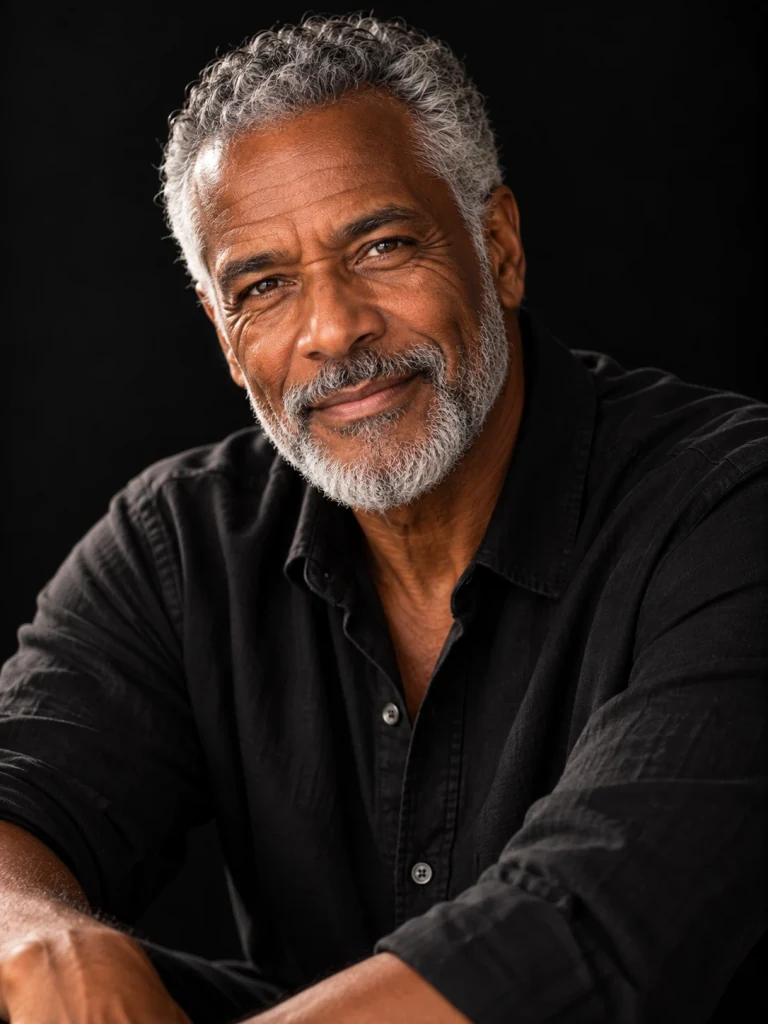 63
Errol, 63
The Understated Groomer
Cares about how he looks. Would never say so.
Every character above is AI-generated and disclosed as such — never a real customer, testimonial or endorsement. See all the Digital Presenters for who each one represents and what they are ready for.
Start with the audit.
Your Creative Audit is complimentary. Share your website and examples of your current creative. Within two business days of receiving the information we need, we'll email you a focused review with three creative opportunities for your 50+ audience and a recommended next step. No obligation to proceed.
Already had your audit and want to talk through a pilot scope? Book a call and we will work through it directly — or reply to the audit email, which reaches the same place.